4/16/2023
According to the Government of Tajikistan's General Customs Administration, 767 electric vehicles will be imported into Tajikistan in 2022, an increase of 720 units year-on-year (compared to 47 volumes in 2021). Why did Tajikistan significantly increase the import of electric vehicles?
Experts predict that by 2040, the number of cars on the world's roads will almost double, exceeding the 3 billion mark. At the same time, road transport accounts for a quarter of all greenhouse gas emissions, contributing to atmospheric and climate change impacts.
Therefore, UN Secretary-General António Guterres called for the global community to switch to electric vehicles at the Katowice Climate Conference (December 2018). He said: "Most countries and regions have reported plans to phase out fossil fuel vehicles and switch to electric vehicles. Other countries have set specific targets to increase the number or share of electric vehicles by 2020-2030."
According to the agreement, by 2030, the carbon emission levels of all newly launched passenger cars and light commercial vehicles in the EU must be reduced by 55% and 50%, respectively, compared with 2021, and be reduced to zero by 2035.
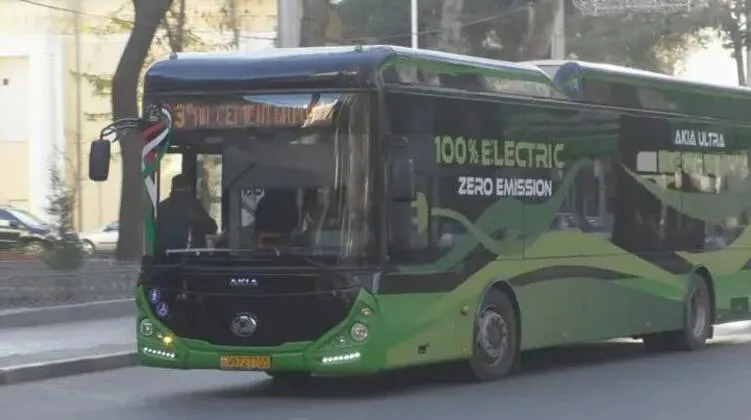
Akia Avesto Automativ Industri executive director of the Tajik-Turkish joint-stock company Akia Avesto Automativ Industri said that in 2021, the company would launch a new experimental electric bus and electric trolleybus with a modern design, and the engine will run entirely on electricity. It can travel up to 200 kilometers.
He said that in 2021, the company conducted trials of electric buses and electric trolleybuses on bus lines 1 and 3 in Dushanbe to see if they suit the country's climate and familiarize drivers with this means of transportation.
"The test results show that the battery consumes 176 kWh and costs 74.1 somonis (about 47.1 yuan) when driving 100 kilometers in an urban area. At the same time, the fuel consumption of the company's diesel-powered buses is 45 liters per 100 kilometers. The average cost is 450 somoni (about 286 yuan). In other words, the fuel consumption of fuel buses is almost six times that of electric buses." Asrol Mirzoyev said.
In addition, Tajikistan's amendments and additions to the Tax Code will exempt electric vehicle import duties, value-added tax, and excise tax for ten years, thereby increasing the number of electric vehicles. At the same time, an increase in the number of electric vehicles will decrease their prices.
Here are a selection of EVs that are related to this news item.
If you found this news item to be of interest to you or you have any suggestions for future blog posts, please let us know. We are in China and have access to all the latest EVs. We can test drive or do a performance review of any EV you might be interested in. And if you are interested in importing to your country, please talk to us about becoming an EV B2B Agent.
Search in EV B2B
popular search terms: Chinese EVs, Hong Qi
Thank you for visiting us. Please leave a message and we will reply by email.