6/7/2023
The EV export industry is all the way "soaring", around the new energy vehicle "travel abroad" pain points from the central to local levels, focusing on the problem and releasing supporting policies to make up for the shortcomings. The Chinese government should accelerate the creation of a global network of high-standard FTAs and sign FTAs to cover more countries and regions. The entry into force and implementation of these FTAs will help China's new energy vehicle enterprises further improve their competitiveness in the international market. In this paper, we will summarise the specific policies related to supporting and guiding the healthy and orderly development of new energy exports, analyze the benefits of the policies for several subjects, prejudge the problems to be avoided in the implementation process, and finally look forward to the effects in the future.
At the same time, the premium capabilities of domestic new energy vehicle brands in overseas markets are also increasing. The overseas pricing of some models is significantly higher than that in China, and the range is as high as 30% to 50%. For example, the price of BYD Tang in China is about 300,000 yuan, and the price in Norway is about 400,000 yuan, similar to the price of the BMW ix3, a pure electric medium and large SUV sold in Norway. In addition to BYD, some models of MG, Xiaopeng, Euler, and other brands are also priced higher overseas than in China.
At the same time, as brands such as BYD enter the African market, new energy vehicles made in China have become an important driving force for the electrification transformation of the African auto industry. Algeria's "Oriental News" commented that electric vehicles made in China occupy more market shares in Africa, and the cake is getting bigger and bigger, providing necessary technical and product support for Africa's electric transformation.
On the one hand, the rapid growth of exports of new energy vehicles has driven the growth of core components such as lithium batteries. In 2022, the total export of lithium batteries nationwide will be 342.65 billion yuan, a year-on-year increase of 86.7%, ushering in a growth window period. On the other hand, with new energy vehicles going overseas, related companies in the industrial chain have also gone overseas to build factories. Under the premise of protecting core technologies, Chinese car companies participate in international competition by building factories overseas, which will help to enhance China's participation and voice in the global supply chain, improve competitiveness, and further maintain the integrity of China's industrial chain and supply chain: resilience and stability.
First, the cost is lower. According to a French auto parts supplier report, Chinese automakers' cost of producing electric vehicles of the same type is 10,000 euros lower than that of European automakers, and the cost advantage is obvious.
Second, it is more resistant to market fluctuations. In 2022, in the context of supply chain crises such as chip shortages and battery price hikes that many car companies worldwide have suffered to varying degrees, BYD's sales will still maintain high growth. They will become the world's new energy vehicle sales champion in 2022. Its highly vertical, and The Independent and controllable supply chain system is indispensable.
Third, push the automobile industry towards a rapidly iterative "consumer electronics" model. Today, China has formed an industrial agglomeration area in the fields of new energy vehicles, power batteries, and key components and has the supporting capabilities of the entire industry.
"Engineer-oriented" technological innovation has effectively enhanced the endogenous power of industrial development.
In the new energy field, relevant Chinese companies have always adhered to "engineer-oriented" independent innovation and have achieved high levels of innovation in core components such as batteries, motors, and electronic controls. A technological breakthrough has been achieved, and considerable technological advantages have been achieved. Take the power battery, which accounts for about 40% of the cost of electric vehicles, as an example. China's power battery industry has developed rapidly in recent years, supporting new energy vehicles with longer mileage, faster charging speed, and more competitive market prices.
The obvious advantages of the original technology have greatly enhanced the endogenous power and discourse power of China's new energy vehicle industry, allowing China's new energy vehicles not to be afraid of competition in the international market, including developed countries, and have a certain premium ability. Become one of the "new three" leading China's foreign trade exports.
Although China's new energy vehicles export situation is gratifying, we still face some difficulties and problems to be solved.
1. It is urgent to build a complete service system
Unlike traditional export products such as home appliances and textiles, automobiles rely more on a complete set of supporting systems such as marketing networks and after-sales services. They need support, guidance, coordination, and regulation.
2. The problem of poor logistics needs to be solved as soon as possible.
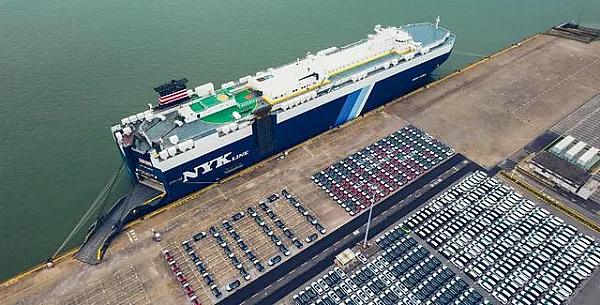
Although the demand for China's new energy vehicles in foreign markets has increased significantly, the lack of capacity of China's car ro-ro ships will undoubtedly limit the export of cars.
3. Proactively pay attention to and pay attention to some trade frictions.
The most typical "trade war" between Japan and the United States that occurred from the mid-1980s to the mid-1990s was automobiles. The U.S. "Inflation Reduction Act" clearly states that the U.S. government will provide tax credits of US$7,500 and US$4,000 to consumers who purchase local, new, and used electric vehicles from January 2023. Moreover, for these cars produced in the United States, the batteries come from countries that have signed free trade agreements with the United States. This is clearly to protect the U.S. market. Now some European countries have indicated that they will take protective measures. The European Union has now introduced the "Battery and Waste Battery Regulations" and "carbon tariff" policies, which in a sense, also form barriers. It is not ruled out that China's large-scale auto exports will trigger trade frictions; we must pay attention to this.
4. Reliance on foreign countries in the field of computing power chips.Chinese auto factories rely on foreign countries in automotive operating systems and high computing power automotive chips, and there is a risk of a "stuck neck." Leading industry companies have adopted extreme suppression measures, which will affect the development and internationalization of China's auto industry.
5. It is necessary to build a good reputation and reputation in the European market
The main problem facing exporting China's new energy self-owned brands is that the export market fluctuates greatly. The demand for new energy vehicles in Europe is still relatively large, which is also a good opportunity for China's exports. In terms of new energy vehicle products, much work must be done for localization, adaptation, and improvement to obtain better satisfaction. At the same time, corresponding sales and maintenance efforts should be made, and a good use environment must be established overseas. Effective guarantee mechanisms must be established to ensure car satisfaction, whether charging facilities or after-sales maintenance. Improve to prevent unfinished services exported to developing countries in the early stage. China's new energy vehicle exports must build a good reputation and reputation in the European market and reduce internal friction.
6. Enterprises expand market information channels are limited
Countries around the world have different certification regulations and access requirements for the import of passenger vehicles. For example, the European Union's chemical REACH regulations, vehicle E-MARK certification, the United States DOT certification and EPA certification, electric vehicle ECER-100 regulations, and technical barriers to trade such as electromagnetic compatibility, respectively, in the energy density and battery life of new energy vehicles. Mandatory specifications are made regarding mileage, charging rate, operation safety and failure protection, collision safety, etc., and are not regularly updated. If the cars entering the market do not meet the relevant regulations, they may face product recalls, high fines, administrative penalties, and delisting risks.
Driven by technological innovation and policy support, China's new energy vehicle brands continue to expand overseas. In addition, the Ministry of Commerce stated that it would continue to work with relevant departments to support new energy vehicle companies to speed up the construction of overseas marketing and after-sales service networks and increase brand promotion. According to industry insiders, China's auto industry has given full play to the advantages of systemization and scale, continuously enriched the matrix of overseas products, and continued to increase its international competitiveness.Here are a selection of EVs that are related to this news item.
If you found this news item to be of interest to you or you have any suggestions for future blog posts, please let us know. We are in China and have access to all the latest EVs. We can test drive or do a performance review of any EV you might be interested in. And if you are interested in importing to your country, please talk to us about becoming an EV B2B Agent.
Search in EV B2B
popular search terms: Chinese EVs, Hong Qi
Thank you for visiting us. Please leave a message and we will reply by email.