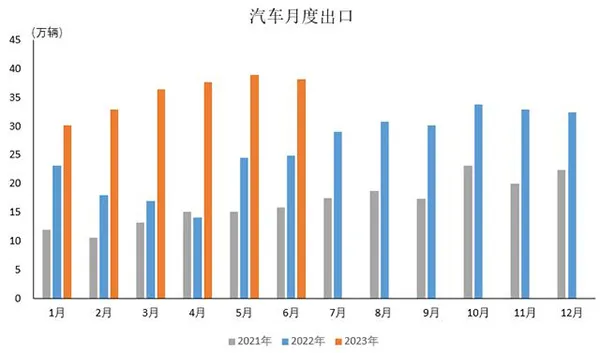
In the export of automobiles, the contribution of new energy vehicles is very large. In the first half of 2023, 534,000 new energy vehicles were exported, a year-on-year increase of 1.6 times, much higher than the overall growth rate of automobile exports.
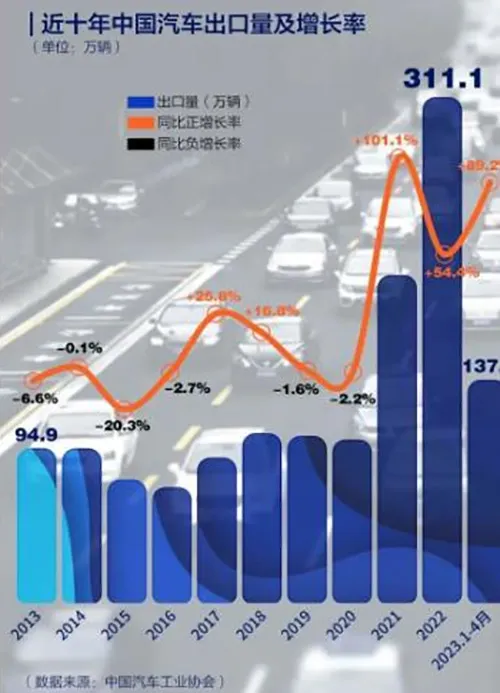
Looking back at the history of China's auto exports, before 2021, the growth rate of China's auto exports will be relatively slow. After 2021, the growth rate of automobile exports will suddenly increase, surpassing Germany and Japan only in the past two years.
 Before 2021, the growth rate of China's auto exports will be relatively slow Source: Beijing News Shell Finance.
In this regard, at the China Electric Vehicle Hundreds Forum (2023) held from March 31 to April 2, Wang Qing, deputy director of the Institute of Market Economics, Development Research Center of the State Council, made it clear in his speech that "at this stage, exports The quantity and scale are not necessarily the bigger, the better, and the growth rate is not necessarily the faster, the better."
The Ministry of Commerce and other relevant departments have seen the problem behind automobile export, especially new energy vehicles; the aftermarket services have not kept up.
On May 25, Shu Jueting, the Ministry of Commerce spokesperson, said at a press conference that China's auto exports are currently showing a phased trend of rapid growth. However, there is still much room for improvement in development quality and efficiency. There are still some difficulties in financial services and overseas after-sales.
The development of China's new energy vehicle aftermarket is relatively slow not only abroad but also at home. The research report "New Opportunities and New Challenges in the Smart Electric Vehicle Aftermarket" (from now on referred to as the research report) jointly issued by Chebai Think Tank, China Automobile Intelligent Inspection, and China Automotive Research Institute conducted an in-depth analysis of the development of China's new energy vehicle aftermarket.
The research report pointed out that with the increase in new energy vehicles, related issues such as data exchange, maintenance, used car transactions, auto insurance, financial services, scrap management, and operation services have become new problems restricting development.
Zhang Yongwei, vice chairman and secretary-general of the China Electric Vehicle 100, believes it is very important to do a good job serving the new energy aftermarket. He said that as China's new energy vehicles enter a new stage of large-scale development, the next development of new energy and smart vehicles will rely more on the rapid growth of the aftermarket industry.
1. The export of automobiles is a big challenge in the aftermarket
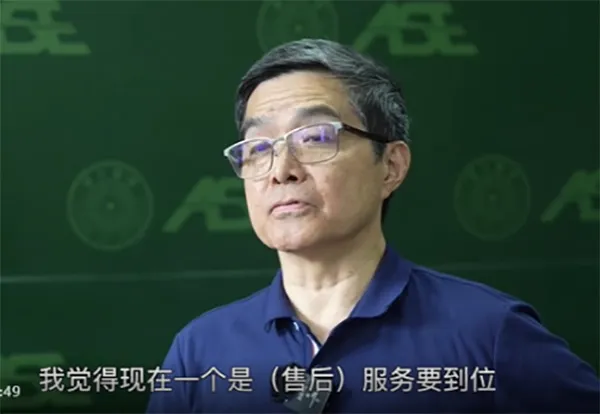
Recently, Ouyang Minggao, vice chairman of the China Electric Vehicle 100 and academician of the Chinese Academy of Sciences, was very satisfied with the rapid development of new energy vehicle exports in an interview with The Paper. He said: Now new energy vehicles and power batteries are currently the most exported products in China. Dazzling products, the market is also expanding. This is brought about by the technological and product advantages China has achieved in so many years of development. "
However, he has concerns about aftermarket services. He said: "If we talk about the issues that must be paid attention to now, I think one of them is that the after-sales service must be in place. This is also a problem that everyone is more worried about."
 Screenshot of Academician Ouyang Minggao's interview
The so-called automotive aftermarket refers to various services surrounding the use of the car after the car is sold. It covers all the services consumers need after buying a car.
The main services in the aftermarket of new energy vehicles include the construction of charging facilities, charging services, insurance, financial leasing, etc.; it also includes the maintenance of batteries and motors, as well as the maintenance and replacement of other parts; it also includes some modifications, Personalized customization, and other services.
China's automobile exports are growing rapidly, and the export of new energy vehicles is growing faster, which poses a huge challenge to the development of the aftermarket of new energy vehicles.
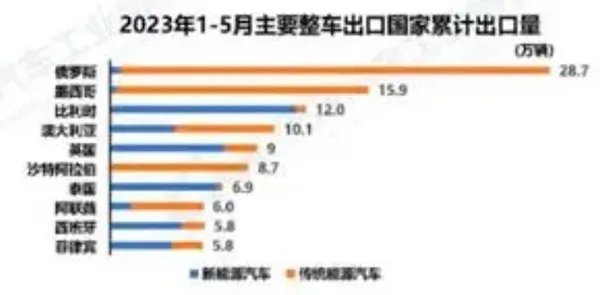
According to the China Association of Automobile Manufacturers, 1.933 million vehicles were exported from January to May, a year-on-year increase of 79.85; among them, 673,000 new energy vehicles were exported, a year-on-year increase of 1.2 times. The top three exporters of automobiles are Russia, Mexico, and Belgium; the top three exporters of new energy vehicles are Belgium, the United Kingdom, and Thailand.

As Academician Ouyang Minggao said, the export of new energy vehicles in China, "whether it is a developed country or a developing country in Southeast Asia, is expanding in all directions." That is to say, China's new energy vehicles are exported to a wide range of countries, from Western Europe to Southeast Asia, from the Middle East to Latin America, all-encompassing. For BYD alone, its new energy passenger vehicles have entered 53 countries and regions including Japan, Germany, Australia, Singapore, Thailand, Brazil, and New Zealand.
This creates a huge problem, that is - how to carry out automotive aftermarket services in these vast and complex regions. Li Xianjun, director of the Automobile Development Research Center of Tsinghua University, once said that automobiles pay attention to economies of scale. Automobiles are exported to many countries, and "pepper noodles" are everywhere. After-sales of products is a big problem.
The case of "breaking the halberd" occurred more than 20 years ago. According to Caijing, more than 20 years ago, Chinese motorcycles were the first to go overseas and competed in the Southeast Asian market. The reason why they were "killed back" by Japanese motorcycles is that one of the lessons is that they do not pay attention to after-sales. Therefore, Zhang Hongbo, Secretary-General of the China Motorcycle Chamber of Commerce, said: "On the way to the sea, the car should cross the river by feeling the experience of the motorcycle to avoid falling again.".
2. The aftermarket of new energy vehicles is more complex
Compared with motorcycles, the aftermarket service of fuel vehicles is more complicated; compared with traditional fuel vehicles, the unique three-electric system (power battery, drive motor, and electronic control system) in new energy vehicles makes the aftermarket service more comprehensive and complex.
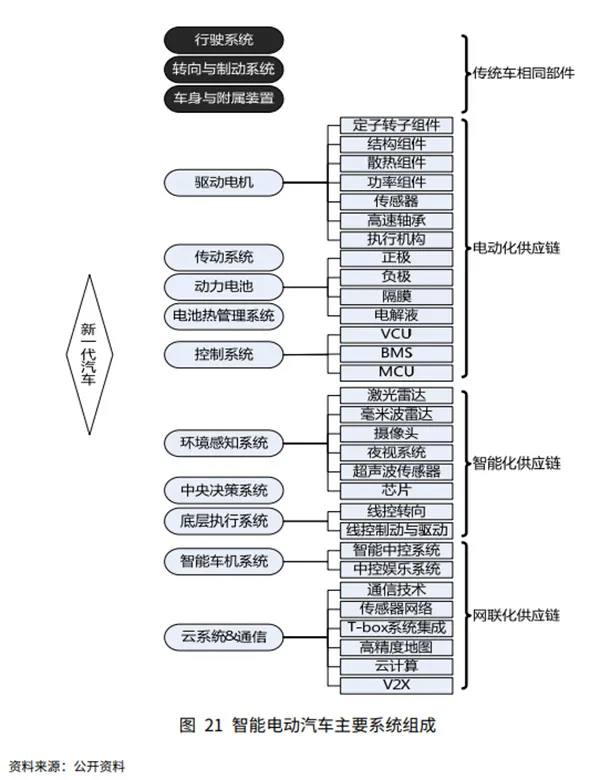
According to the research report, compared with traditional fuel vehicles, new energy vehicles have added electric items and smart items, and the structure, value chain, industrial chain and ecological development of the automotive aftermarket have also changed. Therefore, the traditional automotive aftermarket The original technology, model, and main body of the market are not suitable for the development of the new energy vehicle aftermarket.
 The new generation of new energy vehicles does not have many parts in common with traditional vehicles
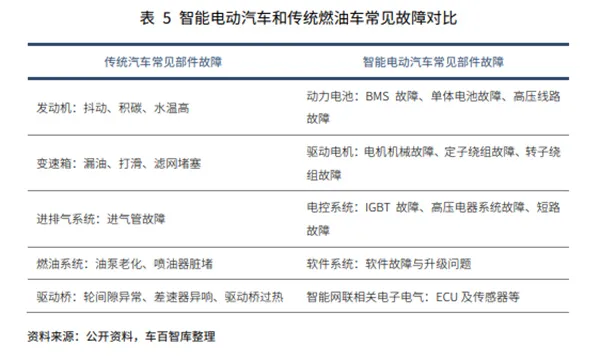
 The common faults of new energy vehicles and traditional fuel vehicles are very different
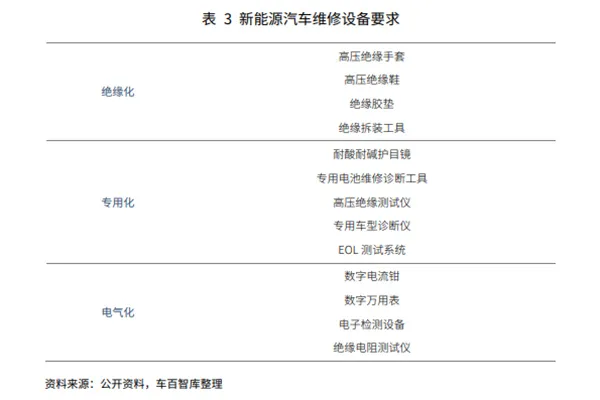
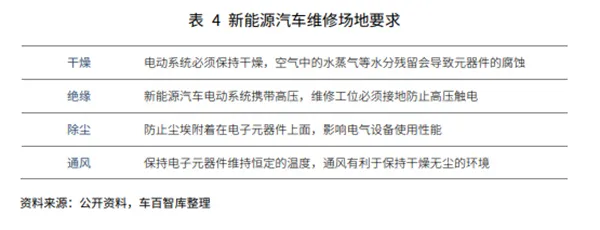
Specifically, first, the maintenance of new energy vehicles relies heavily on automated special tools and software, and the lack of maintenance tools and equipment has become a major problem. In addition, the maintenance of new energy vehicles has high requirements for the site, which also brings challenges to maintenance.


Second, new energy vehicles put forward new requirements for maintenance professionalism, such as in-depth operations such as high-voltage components and battery unpacking inspections involved in the maintenance of new energy vehicles, and there is an extreme shortage of relevant maintenance personnel.
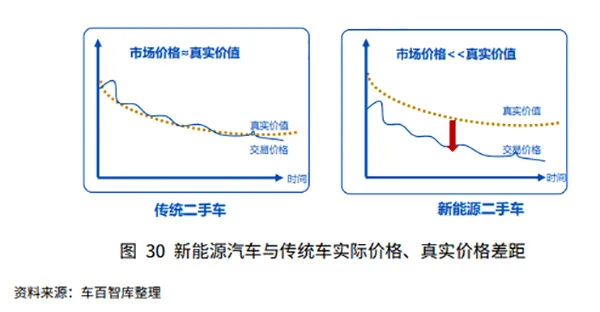
Third, the second-hand car circulation of new energy vehicles faces problems such as value reflection and matching. Relying on traditional evaluation methods has been difficult to adapt to the current value evaluation due to the increase of smart and electric components, and the rapid selection of intelligent and connected product technologies carried by new energy vehicles has also made the evaluation model of new energy used cars more complicated.

Fourth, there are difficulties in insurance design and operation in the aftermarket. The technology of new energy vehicles is constantly being iteratively upgraded. Insurance companies must combine the actual scenarios and uses of new energy vehicles to form a comprehensive solution from data, pricing, underwriting, claims to customer service, etc., which poses a challenge to the insurance industry. new requirements. For example, referring to the loss assessment of traditional fuel vehicles cannot truly reflect the level of new energy sources. At the same time, loss assessment personnel who do not understand new energy vehicle technology are prone to disputes over the assessment of damages. Especially for components involved in the "three electric" fields, there are often disputes over fixed damages in terms of maintenance. In addition, the characteristics of the battery itself and the new business model derived from the battery have brought about the complexity of insurance products, and the definition of liability in driverless mode has made insurance design very difficult.
Fifth, the scrapping and recycling of power batteries are prominent. Difficulty in recycling and poor economy are urgent problems to be solved in the field of power battery recycling. High recycling prices, technology costs, labor costs, safety costs, and other factors have failed the current power battery cascade utilization business model, making it difficult for related recycling companies to operate.
Sixth, the issue of supplementary energy services is still prominent. Factors such as product quality of charging piles, maintenance of charging pile equipment, profit model, and user charging experience have become obstacles to the development and construction of charging piles. Good service for the aftermarket of new energy vehicles.
The above six points come from the research report's summary of China's new energy vehicle aftermarket shortcomings. These shortcomings may also appear in China's new energy car companies going overseas. Moreover, China's new energy car companies have not yet solved these deficiencies in the aftermarket in China, so how can they solve the more complicated aftermarket problems that have emerged after going overseas?
3. High-level executives pay attention to the aftermarket of overseas car companies
The Ministry of Commerce and other relevant departments have seen the problem that the aftermarket services have not kept up with the export of automobiles, especially the export of new energy vehicles.
On May 25, Shu Jueting, spokesperson of the Ministry of Commerce, said at a press conference that China's auto exports are currently showing a phased trend of rapid growth, but there is still much room for improvement in development quality and efficiency. There are still some difficulties in financial services and overseas after-sales.
To this end, the Ministry of Commerce stated that in the next step, it will work with relevant departments to focus on the following three aspects:
The first is to strengthen transportation security, promote medium and long-term strategic cooperation between automobile companies and shipping companies, encourage shipping companies to speed up the construction of ro-ro fleets and expand the capacity of car exports. The second is to encourage auto companies to cooperate with domestic and foreign financial institutions to innovate financial products and services on the premise of compliance with laws and regulations and controllable risks to better meet the needs of enterprises. The third is to support auto companies to improve their international marketing and after-sales service systems, enhance their overseas brand promotion, display sales, and after-sales service capabilities, and establish a good brand image.
Among the three aspects of work, the second and third points all involve the aftermarket of new energy vehicles going overseas.
Currently, in the process of going overseas, China's new energy car companies mostly adopt a cooperative approach, relying on local dealers and aftermarket service providers to provide after-sales and other aftermarket services.
For example, when BYD goes overseas, it adopts a sales model mainly based on overseas local partners and will rely on high-quality local sales and service partners in various overseas markets to provide consumers with quality assurance, maintenance, repair, rescue, customer care, Internet of Vehicles, etc. Comprehensive after-sales service to upgrade consumers' car experience. For example, BYD and Shell signed a global strategic cooperation agreement to jointly improve the charging experience of BYD battery electric vehicle (BEV) and plug-in hybrid electric vehicle (PHEV) users.
In addition, when China's new energy vehicles go overseas to the European and American markets, they will adopt the "CarLease" model of renting and selling.
In Europe and the United States, the "CarLease" model is very popular. About 30% of new car sales are completed by "CarLease" car rental companies. In the field of public vehicles, this proportion exceeds 50%. In this model, consumers do not need to buy a new car after choosing it but only need to sign a lease contract with the dealer, negotiate the ratio of down payment, monthly payment, and final payment, and determine the lease period (minimum 1 year, maximum 5 years), you can get this car, and you can drive it when you get it, avoiding the trouble of registering the car after buying the car, buying insurance, etc., and don't have to worry about repairing the car.
Chinese car companies that have entered the European and American markets, such as Weilai, Lynk & Co, and Airways, mostly adopt this model when going overseas. Moreover, many car companies do not do "CarLease" in person, but cooperate with local "CarLease" dealers, thus avoiding the cumbersome aftermarket services.
However, there are also car companies trying to do "CarLease" themselves, such as Weilai and Lynk & Co. For this reason, NIO had to invest heavily in NIO House (NIO Center) and planned to build 1,000 NIO Houses in Europe by 2025 to provide aftermarket services for NIO car owners.
Although Weilai's approach is more difficult, it represents the ultimate pursuit of Chinese car companies. According to Jipai Daily's interview with Zhang Xiang, a visiting professor at the Yellow River Institute of Science and Technology, domestic new energy car companies going overseas is only a pre-planning plan, and it will take a long time to make profits. Instead of relying on local partners, selling (lease) in person, doing a good job in the automotive aftermarket service, and making a profit from it is undoubtedly the best way to make a profit. In addition, Zhang Yongwei said that the next step in the development of new energy and smart cars will depend more on the rapid growth of the aftermarket industry. Doing a good job in the automotive aftermarket industry will also promote the sales of new energy vehicles overseas.
4. Relevant suggestions for the market after the car companies do a good job
The research report provides some suggestions for new and traditional energy car companies in response to the problem of insufficient aftermarket services for car companies. Although these suggestions are aimed at the domestic automotive aftermarket, they still have certain guiding significance for the overseas automotive aftermarket.
The research report believes that enterprises should improve their own brand post-market system as soon as possible, accelerate the digital transformation of channels, make full use of big data to improve related services, and integrate with affiliated companies to build a post-market ecology, etc.
Under the influence of the "new four modernizations", cars no longer only have the attributes of means of transportation, but have evolved into a body of content and services, and the future automotive aftermarket will also undergo corresponding changes. With the rapid increase in the penetration rate of new energy vehicles, it is imminent to build a new energy vehicle aftermarket, whether it is for traditional car companies, new car manufacturers, or related companies in auto insurance, auto maintenance, and used car transactions.
First, new energy car companies should improve their brand aftermarket system as soon as possible.
Regardless of whether traditional car companies or new car manufacturers, they should seize the time to improve their brand-new energy vehicle aftermarket system, and actively promote the circulation of new energy vehicles, to cope with the fierce competition in the new energy vehicle market, such as: establishing and improve new energy used vehicles Official certification system, establishment of a comprehensive value-preservation repurchase system, reasonable planning and expansion of new energy second-hand car 4S shop maintenance outlets, etc.
Second, traditional car companies and aftermarket companies should accelerate the digital transformation of channels.
Due to the severe competition in the new energy vehicle industry, the aftermarket has also accelerated the process of survival of the fittest. Building an efficient supply chain and management system will become the core competitiveness. Car companies, second-hand cars, car maintenance, and other related companies should integrate the full-link operation scenarios from online to offline, back-end supply to front-end services, and build a "people-goods-field" business ecosystem that is more like mine. The digital upgrade of the whole industry in the aftermarket.
Third, after-sales departments of car companies and aftermarket companies should rationally use big data for consumer insights to improve products and services.
As post-market information becomes clearer and the seller's market turns into a buyer's market, user experience will become the focus of the post-market in the future. Aftermarket companies should use consumer behavior data and preferences to develop insights into consumer portraits. On the one hand, aftermarket companies should continuously improve their original products and services based on consumer concerns. , cultural consumer groups, and actively carry out product and service innovation.
Fourth, car companies and aftermarket companies should actively participate in and promote ecological construction, and explore the business model of "auto +" industry integration.
On the one hand, aftermarket companies should actively build a cooperative and collaborative industry ecology. In terms of technology research and development, the construction of aftermarket service systems, and the demonstration and application of new models and technologies, win-win cooperation with affiliated companies; Based on the intelligent technology of new energy vehicles, explore more vehicle interaction scenarios, and develop innovative automotive products and service construction. Enterprises should improve their own brand post-market system as soon as possible, accelerate the digital transformation of channels, make full use of big data to improve related services, and integrate with affiliated companies to build post-market ecology, etc.
Moreover, the research report provides some innovative solutions for new energy car companies to improve aftermarket services. For example, blockchain technology promotes data interconnection, online services, and digitization facilitates maintenance services, third-party professional solutions promote second-hand car circulation, UBI facilitates insurance upgrades, battery asset life cycle management promotes value realization, and multi-mode promotes compensation. Can run services, etc.
In short, in the process of the rapid development of automobiles going overseas, especially the rapid development of new energy vehicles going overseas, the subsequent market services cannot be "slipped". Good aftermarket services are of great significance to the development of new energy vehicle companies at home and abroad. The next step in the development of new energy vehicles will depend more on the rapid growth of the aftermarket industry.