6/20/2023
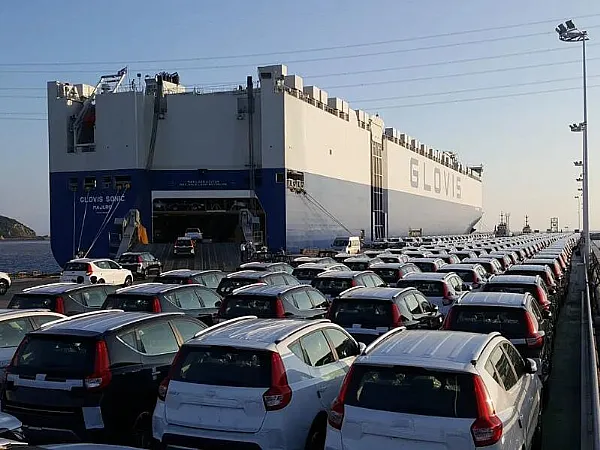
As opposed to the internationalization of the cell phone industry, China's automotive industry is relatively late to the game, but the results are not inferior. Following a quarter among the world's largest auto exporters, the export flywheel still has signs of acceleration. 1.758 million vehicles were exported from January to May, up 81.5% year-on-year. Among them, the export of new energy vehicles was 457,000 units, up 1.6 times year-on-year.
The discerning eye can see that the new energy vehicles are the main carriage to pull the export. Behind the achievement is the result of painstaking research and long-term strategic deep squat. Look at the billions of investment in research and development each year, the relevant policies for more than a decade of real money subsidies that is clear to see.
China's electric vehicles have a complete industrial chain, from vehicle manufacturing to the electric core, power battery, and precision structural components, constituting the core technology chain closed loop. With the overall cost-effective advantage, it not only exported to Asian and African countries but also shared the European and American markets.
Take BYD as an example; in December 2022, overseas sales broke 10,000 again, reaching 11,300 units, and in Europe, it achieved 400% growth. In 2023, in June, in the case eligible for French ecological subsidies into France, not only high-end electric car models cost-effective do enough, and the launch of the Dolphin small electric car, priced at only 28,990 euros, lower than the price of similar models in France and Europe.
In 2022, the U.S. introduced the Inflation Reduction Act, which ultimately allowed only electric vehicles owned by U.S.-based car companies to enjoy full tax credits, namely Tesla, Ford, General Motors, and Stellantis.
The Hyundai GV70, assembled in the U.S. Alabama plant, was originally eligible for the subsidy but was excluded from the final subsidy list after the rules were published because a Chinese company produced the batteries used in the GV70. This typical exclusionary practice needs to be guarded against other countries following suit. The French media has reported that the government intends to change the new energy subsidy policy. Some brands, as long as an electric car sold for less than 47,000 euros, and weighs less than 2.4 tons, can get the French government to subsidize 5,000 euros. After the change, the future 5,000 euro subsidy will be directly linked to the carbon dioxide emissions of the production process of electric vehicles.
Citing the China Automotive News, Xia Xiaofeng, an associate researcher at the Shanghai Academy of Social Sciences, said, "This standard seems reasonable on the surface, but in fact will build a 'fence wall' for electric vehicles from countries outside Europe to enter the French market." Industry analyst Yu Shengmei believes that the number of new energy vehicles exported from China to the UK, France, and Germany in the first half of 2022 was 32,600 units, 14,100 units, and 11,400 units, respectively. Along with the European restrictions on carbon emissions, subsidized new energy vehicle consumption, and market demand growth to Chinese car companies to upgrade the sea brings a rare window. France, as an important market, such as subsidies to change the impact of corporate exports, speaks for itself.
According to Yu Dongsheng, a researcher at Northwestern Polytechnic University's New Energy Application Technology Research Center, Norway has no auto industry. It gives preferential subsidies to all imported electric cars without discrimination, so Azera, Xiaopeng, and Arashiro have made Norway their first stop in Europe.
According to the French newspaper Echo, to achieve the goal of 800,000 vehicles per year in Europe by 2030. BYD selects European sites to build factories; Spain, Germany, and France are considered targets. BYD responded that it is currently assessing the feasibility and looking for a suitable location. Industry analyst Liu Rui Ling believes that constructing factories in Europe and other major export regions is an inevitable choice with the increasing total exports. The trade stick of helplessness does not coerce them. BYD wants to achieve the goal of 800,000, so the degree of localization is an inevitable choice. But with "India" previous experience, Chinese car companies' overseas plant selection must also be careful. Careful assessment, rational avoiding policy risks, choose a business environment in more stable countries is the top priority. Indeed, new energy vehicles are the "front runner" of China's high-end manufacturing going abroad.
In the face of difficult challenges, it is more important to highlight the strengths of Chinese brands. Explore how to play the industrial chain, supply chain, distinct technology advantages, rapid and local financial industry co-prosperity, and symbiosis is the solution to break the situation. Focusing on the Southeast Asian market, Thailand and Indonesia are the two key markets for domestic new energy vehicles. This is inseparable from the local support policy. In 2022, the Thai government announced a package of incentives for electric vehicles from 2022 to 2025. This includes encouraging the import of electric vehicles, cultivating national consumption habits, and Chinese tax support to encourage companies to build factories in Thailand.
Indonesia, the world's fourth most populous country, has set a clear development target of 13 million electric two-wheelers and 2.2 million electric vehicles by 2030 to encourage the development of new energy vehicles. And the new energy vehicle sales to give government subsidies. According to the China Passenger Association, China exported 79,420 new energy vehicles to Thailand in 2022, with a growth rate of 96% compared to 2021. The market and policy are both strong, attracting many Chinese companies, including SAIC, Great Wall, Nezha, and BYD, to choose to build factories in Thailand, which in turn will radiate to develop the entire Southeast Asian market. According to Wang Honghao, an auto industry analyst, Chinese automakers have a two-year window in Southeast Asia, and if they seize it, they will have a chance to surpass Japanese cars. However, Southeast Asia is not a single unified market like China, but fragmented from each other, and different brands of Chinese car companies may divide their spheres of influence. Some Chinese car companies have mature localization strategies in South America, where time, space, and humanities are far away.
Chery Automobile, for example, has its largest overseas plant in Brazil, with an annual production capacity of 150,000 vehicles. 2023 Chery has gone a step further by announcing a $400 million investment in a plant in Argentina, targeting an annual production capacity of 100,000 vehicles in Argentina by the end of 2030, directly providing 6,000 jobs. With a good market layout, Chery has become the main force of China's auto exports. Four hundred fifty-one thousand three hundred units were exported in 2022, up 67.7% year-on-year, second only to SAIC's 906,000 units. CITIC Securities predicts that by 2030, China may export as many as 5.5 million vehicles, of which 2.5 million will be electric. From a big importer to a big exporter, the vicissitudes of China's auto industry in just a decade or so, the road to reversal can be considered a microcosm of China's manufacturing leap.
China's auto market is already a stock competition, overcapacity, price war, and "internal heat" problem appear. If we look at the global market, the demand for new energy vehicles has just begun. Suppose we can solve the problem of going out. In that case, we can eliminate the trouble of internal volume and make the enterprise bigger and stronger in the more diversified baptism.
China's auto industry is still rising after becoming a big exporter.
Here are a selection of EVs that are related to this news item.
If you found this news item to be of interest to you or you have any suggestions for future blog posts, please let us know. We are in China and have access to all the latest EVs. We can test drive or do a performance review of any EV you might be interested in. And if you are interested in importing to your country, please talk to us about becoming an EV B2B Agent.
Search in EV B2B
popular search terms: Chinese EVs, Hong Qi
Thank you for visiting us. Please leave a message and we will reply by email.