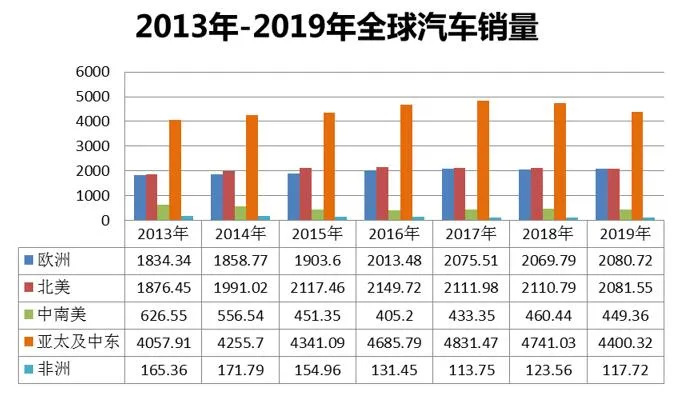
In 2019, new car sales in Africa totaled 1.1772 million, accounting for only about 1.2% of global sales, while used car sales were more than twice that of new car sales.
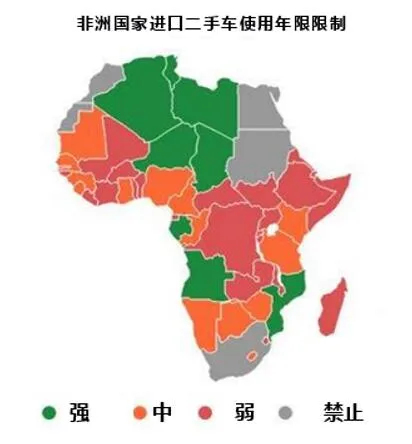
Africa’s second-hand car ban In Africa, its industrial base is very weak, and there are no local car manufacturers. Second-hand car imports have become Africa’s main source of vehicles. Compared with new cars, second-hand cars are much lower in price and tariffs, so Used cars are more competitive in Africa. However, not all African countries import used cars. Different African countries have different requirements and restrictions on imported used cars.
Data source China-Africa Trade Research Center.
Among the 30 African countries, Egypt, South Africa, Sudan, and Morocco have completely banned the import of used cars. More than 20 other countries prohibit the import of second-hand cars that are ten years old or older, and some countries also impose import restrictions on vehicle mileage and impose value-added tax on them when they exceed the useful life.
In addition, Nigeria is the largest second-hand car market in Africa and one of the busiest auto markets in sub-Saharan Africa, with a ratio of used car sales to new car sales of 4:1. Nigeria does not have a vehicle scrapping system. After the vehicle has exceeded its service life, almost all vehicles rely on replacing auto parts to maintain the normal operation of the vehicle.
Nigerian Used Car Import Regulations
1. Must be left-hand drive.
2. The age of the vehicle is not more than 15 years, and it applies to second-hand vehicles with the tax number 8703.10.00-8703.90.0000.
3. After completing the Destination Inspection (DI), the used car must be inspected in Nigeria before customs release it.
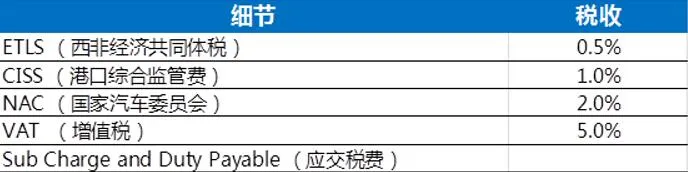
4. Regarding new cars, the tariff is 20%-35% for passenger cars, 5%-10% for passenger cars and trucks, 5% for CKD, 5% for special-purpose vehicles, 0% for motor vehicles for people with disabilities, and 10% for various auto parts. The tax rate for used cars is about 35% (data source: Nigeria Customs).
5. Excise tax on used cars:
Data source: Nigeria Customs
Procedures and documents required for import:
1. Bill of lading
2. Certificate of export and certificate of manufacture
3. Ocean bill of lading and insurance policy (issued by Nigeria insurance company).
4. VAT payment voucher.
5. Form M.
6. Inspection Report
7. Packing List
8. Joint Certificate of Valuation and Origin
![]()
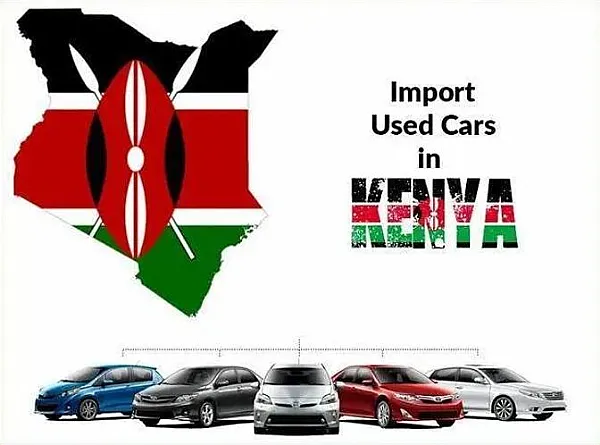
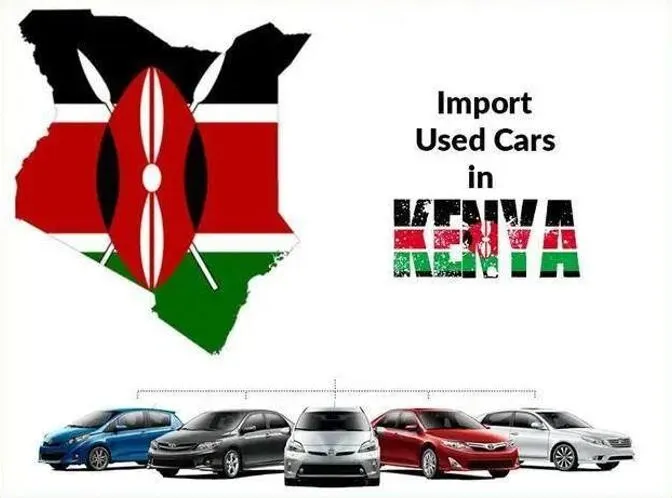
As the big brother in East Africa, Kenya, like all African countries, lacks technical personnel, core technology, and insufficient funds. It is highly dependent on imported vehicles to meet domestic demand. Automobile imports can account for 94% of the bilateral automobile trade; among the imported automobiles, the share of second-hand cars alone is as high as 80%. Kenya, as an advantageous country with the port of Mombasa, more than 70% of second-hand cars will be re-exported to other African countries, such as Uganda and Tanzania. According to the current law in Kenya, it is allowed to import second-hand cars within eight years (from the time the vehicle was first registered), and the car is subject to 25% import tax, 30% consumption tax, and 16% value-added tax, in this order Cumulative payment. Moreover, different taxes are levied according to the age of the vehicle, and second-hand cars with a vehicle age of more than three years will face higher taxes. The booming used car trade has brought high taxes to the government and met the needs of some local people, but it has also hindered new car sales and the development of the auto industry.